
Short answer: restriping a Tampa parking lot on its existing layout costs an estimated $4–$6 per stall, with accessible stalls at about $25–$60 each and a mobilization charge of $250–$400 on smaller lots. New layouts after paving run about $8–$15 per stall. Most lots are striped in a few hours without closing.
What we paint
- Standard, compact and angled stall lines
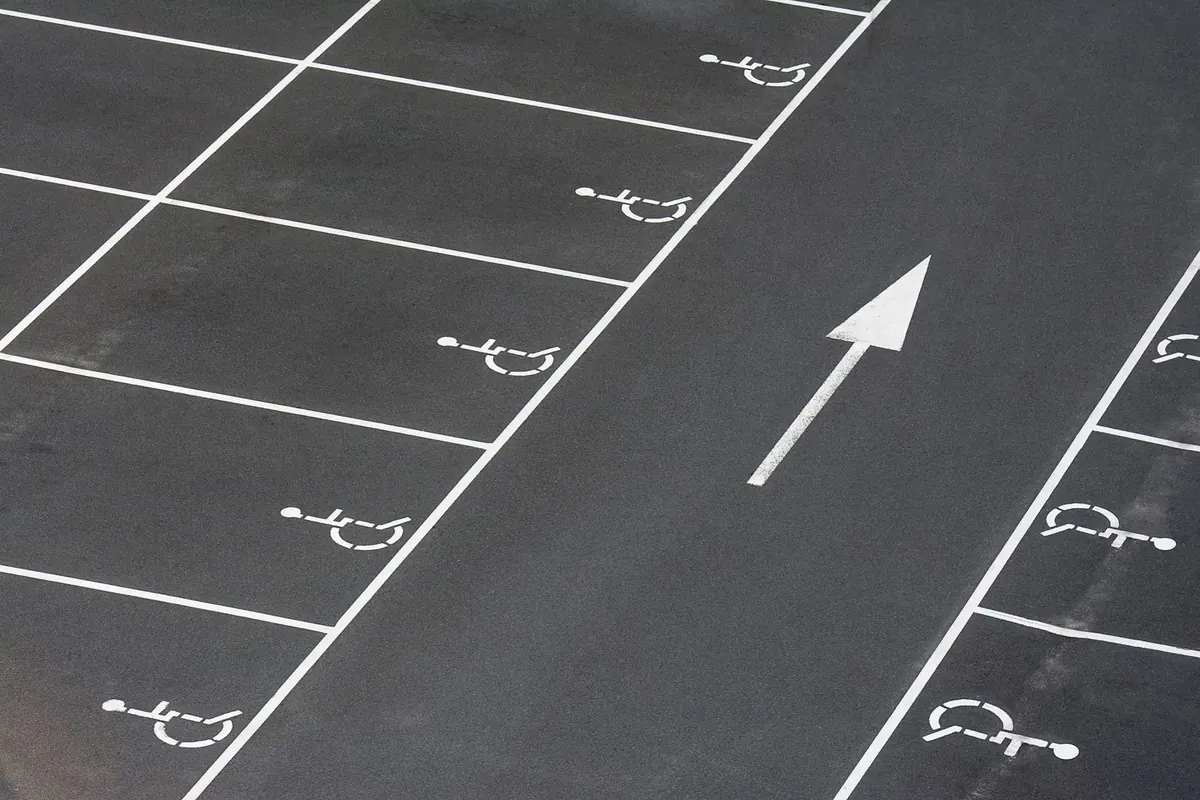
- Accessible parking stalls with the access aisle, symbol and hatching
- Directional arrows, stop bars and crosswalks
- Fire lane curbs and lettering
- Loading zones, reserved and numbered spaces
- Pickup and delivery bays for restaurants and retail
Accessible spaces are not optional
Accessible parking is where restriping jobs most often go wrong. The number of accessible spaces depends on the total number of stalls, at least one of them has to be van-accessible with a wider aisle, and they have to sit on the shortest accessible route to the entrance. The Florida Accessibility Code also sets requirements for signs and markings that go beyond the federal minimum. When we restripe we check the count and layout against the current requirements and tell you if something is out of date, because faded or missing accessible markings are a common reason businesses hear from code enforcement or an attorney.
Restriping versus a new layout
A restripe follows the ghost of the old lines, which keeps costs down and takes a few hours. A new layout is measured from scratch with chalk lines and tape, either because the lot has been repaved or because the old layout no longer works. A layout change can sometimes gain a few spaces, or improve traffic flow around a drive-through, but it takes longer and is priced per stall.
Paint that suits a Florida lot
Most lots are striped with water-based traffic paint, which dries fast and works well on asphalt. High-traffic lanes and crosswalks can use thermoplastic instead, which lasts several times longer but costs more. Glass beads can be dropped into the wet paint so lines reflect headlights at night. We'll recommend what fits how your lot is used and how often you want to come back to it.
Best done with sealcoating
Sealcoat covers every line on the lot, so striping always follows a sealcoat. Booking both together means one visit, one mobilization charge and one closure plan. If the lot is being repaved, we stripe once the new asphalt has cured enough to hold paint, usually within a few days.
Parking lot striping prices in Tampa
| Job | Estimate | What it covers |
|---|---|---|
| Restripe on the existing layout | $4–$6 per stall | Standard 4 in. lines, traffic paint |
| New layout, measured and painted | $8–$15 per stall | After paving or a redesign |
| Accessible stall with symbol and access aisle | $25–$60 per stall | Painted to ADA dimensions; signs extra |
| Arrows, stop bars and stencil lettering | $20–$60 each | FIRE LANE, NO PARKING, STOP |
| Wheel stops supplied and pinned | $60–$120 each | Precast concrete or recycled rubber |
| Mobilization | $250–$400 | One charge per visit on small lots |
Estimates, not quotes. Striping prices are estimates based on published per-stall rates, reviewed October 8, 2026. Stall count, layout changes and the number of stencils set your final figure. Every service is compared side by side in our Tampa paving price guide.
Related services
We also work across Hillsborough County, including Brandon, Riverview and Lutz.
Questions
How often should a parking lot be restriped?
Every one to two years on a busy retail lot, and every two to three on a quieter office or church lot. Restriping is also due after every sealcoat, because sealer covers the old lines.
Can you change our layout to fit more spaces?
Often, yes. Stall width, angle and aisle width can sometimes be adjusted within local code to gain spaces, though accessible spaces and fire lanes have to stay. We measure the lot and show you the options before painting anything.
How long does fresh striping take to dry?
Traffic paint is usually dry enough for cars within 30 minutes to an hour in Tampa weather. We stripe in sections so the lot does not need to close.
Last updated October 8, 2026